38 understanding carbs on food labels
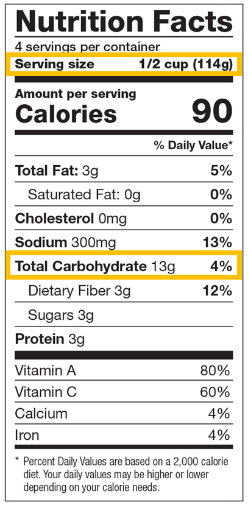
Food Labels | CDC - Centers for Disease Control and Prevention If you eat the whole thing, you are eating 8 times the amount of calories, carbs, fat, etc., shown on the label. Total Carbohydrate shows you types of carbs in the food, including sugar and fiber. Choose foods with more fiber, vitamins, and minerals. Choose foods with lower calories, saturated fat, sodium, and added sugars. Avoid trans fat. Learning To Read Labels - Diabetes Education Online The "Nutrition Facts Label" is found on the outside of the container. To count carbohydrates, look at three things: Serving Size Number of Servings Per Container Grams of Total Carbohydrate per serving The total carbohydrate tells how many grams of carbohydrate are in one serving. Be careful when reading the label.
Understanding Food Labels - Nutrition: Science and Everyday Application The FDA uses the following definitions for interpreting the %DV on food labels:4 5%DV or less means the food is low in a nutrient. 10% to 19%DV means the food is a "good source" of a nutrient. 20%DV or greater means the food is high in a nutrient.

Understanding carbs on food labels
How To Read Food and Beverage Labels - National Institute on Aging Although frozen and canned fruits and vegetables have food labels, fresh varieties often do not. You can find nutrition information for fresh vegetables and fruits on the USDA website. Or you can call the U.S. Department of Agriculture's Food and Nutrition Information Center at 301-504-5414. Understanding percent Daily Value (% DV) How To Read Nutrition Labels (Like a Pro) - Ditch The Carbs Reading and understanding food labels can be downright confusing when you are carb counting. After all, food labelling regulations are complex and food manufacturers rely heavily on "confusion marketing". That's why it's essential you learn how to read nutrition labels. How to read nutrition labels Jump to: Carb counting 101 Understanding food labels | Diabetes UK The labels show how many calories are in the food or drink and are also colour coded to show whether the food is low (green), medium (amber) or high (red) in fat, saturated fat, sugar and salt. The information on the front of the pack also tells you how the portion of the food contributes to the Reference Intake (RI) of an adult.
Understanding carbs on food labels. 5 Understanding Food Labels and Health Claims - Maricopa low salt. Fewer than 140 milligrams of sodium. low cholesterol. Fewer than 20 milligrams cholesterol and 2 grams of saturated fat. lean. FEver than a set amount of grams of fat for that particular cut of meat. high. It contains more than 20% of the nutrient's daily value. good source. Reading Food Labels for Carbohydrates Article - dummies To find the amount of carbohydrates in your foods, follow these steps: Look for the line that reads "Total Carbohydrate" on the label. The value on this line will tell you how many grams of carbohydrates are in one serving of the food. Check the number of servings per container to see if your package has one or more servings. Understanding Ingredients on Food Labels - Professional Heart Daily ... Understanding Ingredients on Food Labels. Food labels are an important source of information about calories and the nutritional value of the foods you eat, a crucial tool in building a heart-healthy diet. The Nutrition Facts information is always displayed in the same orderly fashion and helps you understand how much of certain nutrients that ... Low Carb Guide to Understanding Nutrition Labels - Virta Health Sugar should be zero as often as possible (1-2g at most). Fiber is a carb and should be included in your total for the day (initially 30g or less). Again, pay attention to the serving size. Something might be low in carbs, but if you eat 3 or 4 servings, you can easily go over your daily limit. 7.
How to Understand and Use the Nutrition Facts Label | FDA - U.S. Food ... That is two times the calories and nutrients shown in the sample label, so you would need to double the nutrient and calorie amounts, as well as the %DVs, to see what you are getting in two... Understanding Food Labels | The Nutrition Source | Harvard T.H. Chan ... Under the Food Allergen Labeling and Consumer Protection Act of 2004, eight major food allergens—milk, fish, tree nuts, peanuts, shellfish, wheat, eggs, and soybeans—are required to be listed in a "contains" statement near the Ingredients list if present in a food. An example would be "contains wheat, milk, and soy." Food labels - NHS These labels provide information on the number of grams of fat, saturated fat, sugars and salt, and the amount of energy (in kJ and kcal) in a serving or portion of the food. But be aware that the manufacturer's idea of a portion may be different from yours. Some front-of-pack nutrition labels also provide information about reference intakes. Understanding Food Nutrition Labels - American Heart Association 1 - Start with the serving information at the top. This will tell you the size of a single serving and the total number of servings per container (package). 2 - Next, check total calories per serving and container. Pay attention to the calories per serving and how many calories you're really consuming if you eat the whole package.
Understanding a Nutrition Label - David Leisey This eLearning tab interaction helps people read a nutrition label. Through interacting with each of the four color-coded sections, users learn how to interpret nutrition labels and make more informed decisions when grocery shopping. Audience: People who shop for groceries and want to make more informed food purchases. Fats, sugar, carbs: How to read a food label (and seven ... - Good Food For example, if you consider that a slice of bread or a piece of fruit contains 15-20 grams of carbs per serve, then a food that contains 60-80 grams of carbs per serve is an energy-dense food that needs to be eaten in controlled portions. A balanced meal will contain 30-60 grams of carbs per serve. The higher the wholegrain content, the better. How to understand food labels | Eat For Health The Nutrition Information Panel on a food label offers the simplest and easiest way to choose foods with less saturated fat, salt (sodium), added sugars and kilojoules, and more fibre. It can also be used to decide how large one serve of a food group choice or discretionary food would be and whether it's worth the kilojoules. How to Read a Food Label | Atkins To complicate matters still further, carbohydrates are comprised of several subgroups, which include dietary fiber, sugar, sugar alcohol and other carbohydrates—a kitchen-sink grouping of gums, lignans, organic acids and flavenoids. (These individual items can be assayed.) The FDA requires that a nutrition label include the total carbohydrates.

Diabetes Tracking: Blood Glucose, Insulin, Carbs Log | MyNetDiary
Food Labels: Carbohydrates | Home & Garden Information Center The 2015 Dietary Guidelines for Americans makes the following recommendations about daily consumption of unrefined carbohydrate foods, based on a 2,000-calorie diet: Choose fiber-rich fruits, vegetables, and whole grains often. 6 ounces of grain products, with at least half of this amount being whole grain products 2 ½ cups vegetables

Frequently Asked Questions | Low Carb for Life
How to Read Carbohydrates on Food Labels - GlycoLeap When learning how to read carbohydrates on food labels, always remember that 1 serving of carbohydrate is equal to 15 g of carbohydrates. If you want to have a snack, it is recommended to eat no more than 1 to 2 servings of carbohydrates in one sitting. That would be around 15 to 30 g of carbohydrates. Snack = 15 - 30 g of carbohydrate
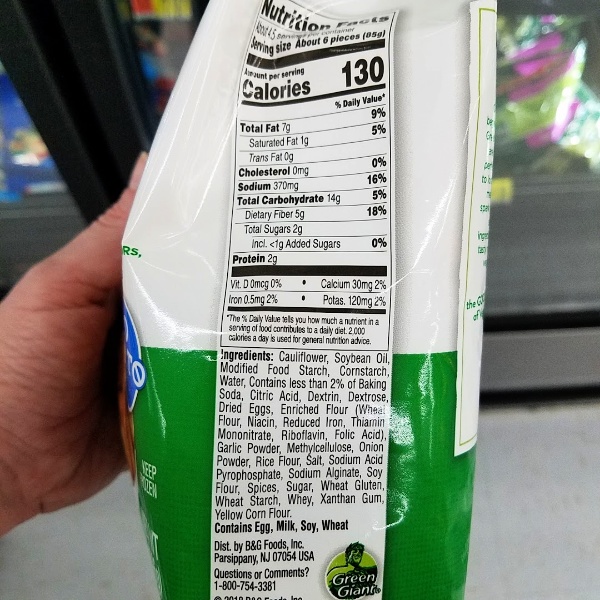
31 How To Read Carbs On Food Label - Label Design Ideas 2020
Get Smart On Carbs | ADA - American Diabetes Association When you eat or drink foods that have carbohydrate—also known as carbs—your body breaks those carbs down into glucose (a type of sugar), which then raises the level of glucose in your blood. Your body uses that glucose for fuel to keep you going throughout the day. This is what you probably know of as your "blood glucose" or "blood sugar."

Decoding food labels | Live Better
Understanding Nutritional Labels | Beaumont | Beaumont Health The Food and Drug Association (FDA) requires food manufacturers to label every packaged food with all ingredients, serving size, and sugar, fiber, fat, carbohydrates (and more) per serving. This is great in theory, but most processed foods contain so many ingredients, and many of these ingredients are tough to read and understand, that knowing ...
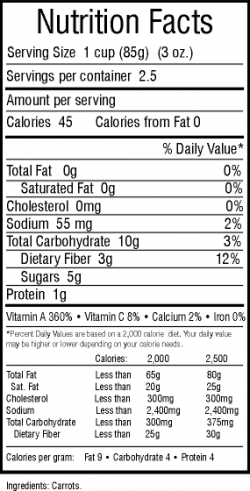
Low carbohydrate food labeling
Reading Food Labels | ADA - American Diabetes Association The Nutrition Facts labels on foods are really the key to making the best choices. We'll cover the basics so that these labels make shopping easier for you. Get started Understanding Carbs You've heard it all. From carb-free to low-carb, to whole and empty carbs, it's hard to know what it all means. Learn more Food & Blood Sugar

How to Read Food Labels: The Good vs. The Bad
Understanding Food Nutrition Labels | American Heart Association 1 - Start with the serving information at the top. This will tell you the size of a single serving and the total number of servings per container (package). 2 - Next, check total calories per serving and container. Pay attention to the calories per serving and how many calories you're really consuming if you eat the whole package.

33 What Are Other Carbs On Nutrition Label - Labels For Your Ideas
Food Labels and Counting Carbs Article - dummies An abbreviated version of the food label is also acceptable for manufacturers to use. Some food packages use a version that omits the footnote details from the bottom of the label and simply provides the key nutrition facts. Taking a sneak peek at newfangled food labels The current food label imagery has been in use for more than 20 years.

FDA/USDA to Announce New Carbohydrate Food Labeling
Reading labels | Diabetes UK Key points Always look at the 'total carbohydrate' on the label when carb counting. This will make sure you are counting both the complex (starchy) and simple (sugary) carbs in your food. Both will raise your blood glucose (blood sugar) levels, and need to be matched with insulin.

healthy foundations: September 2012
PDF Read the Food Label for Carbohydrates - National Institutes of Health Food labels help you choose foods that are lower in calories and in carbohydrates and sweeteners. Here is a food label for a 12-ounce regular soda. The label provides lots of useful information. 1. Serving Size and Number of Servings The serving size is 12 ounces. There's 1 serving in this container. 2. Amount Per Serving

Calories
How to Use the Nutrition Facts Label — Diet Doctor 3. Calculate net carbs per serving. Third, check the grams of dietary fiber per serving (circled in green, above). Subtract the fiber (green) from the total carbohydrates (blue) to get the net carbs. This chocolate has 9 grams of net carbs per serving (14g carbs - 5g fiber = 9g net carbs).
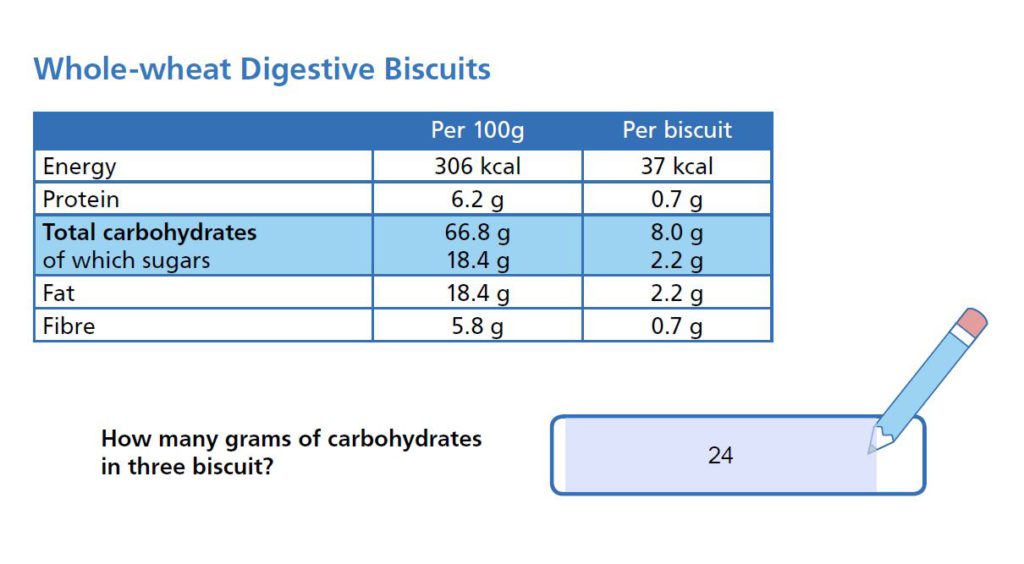
Carbohydrate Counting – The Glucose Never Lies
This Is How to Read a Nutrition Facts Label on the Keto Diet Depending on the daily carb intake you've determined for yourself to stay in ketosis, this is a quick way to determine whether you have room in your daily eating plan for a particular food. (Remember, a ketogenic diet is typically a ratio of about 70-75% fat, 15-25%+ protein, and 5% or less of calories from carbs.)

Use the Dietary Guidelines, MyPlate and Food Labels to Make Healthy Choices
Understanding Nutrition Labels - News-Medical.net The food manufacturers have to use these labels to effectively convey the information about the product to the consumer. The nutrition label helps the health-conscious consumer to make an informed ...
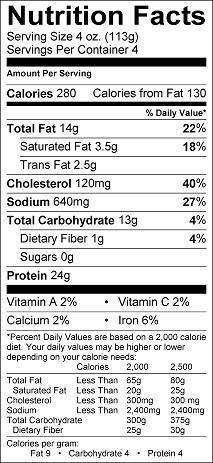
Food Labels Quiz-health And Nutrition Project - ProProfs Quiz
Understanding food labels | Diabetes UK The labels show how many calories are in the food or drink and are also colour coded to show whether the food is low (green), medium (amber) or high (red) in fat, saturated fat, sugar and salt. The information on the front of the pack also tells you how the portion of the food contributes to the Reference Intake (RI) of an adult.

32 Truly Nutrition Label - Labels Information List
How To Read Nutrition Labels (Like a Pro) - Ditch The Carbs Reading and understanding food labels can be downright confusing when you are carb counting. After all, food labelling regulations are complex and food manufacturers rely heavily on "confusion marketing". That's why it's essential you learn how to read nutrition labels. How to read nutrition labels Jump to: Carb counting 101

How To Read Food Labels for low carb diet
How To Read Food and Beverage Labels - National Institute on Aging Although frozen and canned fruits and vegetables have food labels, fresh varieties often do not. You can find nutrition information for fresh vegetables and fruits on the USDA website. Or you can call the U.S. Department of Agriculture's Food and Nutrition Information Center at 301-504-5414. Understanding percent Daily Value (% DV)

How To Read Food Labels for low carb diet
Other Carbs On Nutrition Label - NutritionWalls
Post a Comment for "38 understanding carbs on food labels"